Winter Hazards for Dogs: What to Look Out for on Cold-Weather Walks
When the snows just fallen, winter walks can be magical. Crisp air, frosty mornings and snow zoomies! While many dogs love winter weather, colder months bring a few hidden challenges that aren’t always obvious at first.
From icy pavements to salted roads, winter conditions can quietly affect your dog’s comfort, particularly during regular walks. Being aware of these seasonal hazards helps keep winter walks enjoyable rather than uncomfortable or cut short.
1. Road Salt & De-Icing Chemicals
During winter, pavements and roads are often treated with salt and de-icing chemicals to prevent ice. While effective for people, these substances can be harsh on dogs’ paws.
Repeated contact with salted surfaces can cause irritation, redness and soreness on paw pads. Many dogs respond by licking their paws once they’re home, ingesting these chemicals and further aggravating sensitive skin.
Tip: Wiping or gently rinsing paws in lukewarm water after winter walks helps remove salt residue before it causes discomfort.
2. Snow Clumping Between Toes
Snow doesn’t always stay soft underfoot. It can collect between a dog’s paw pads, melt slightly from body heat, and then refreeze into hard clumps.
This is a common reason dogs suddenly limp, stop walking or bite at their feet during snowy walks. Dogs with longer fur between their toes are especially prone to snow build-up, making regular paw checks important in winter conditions.
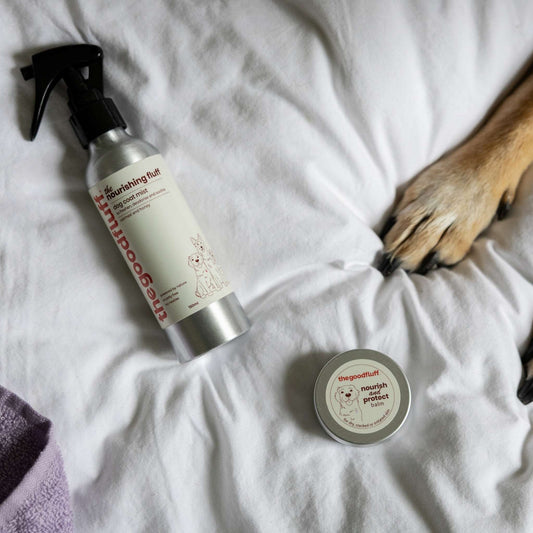
Tip: Keep the hair between the paw pads trimmed short. Applying a layer of paw balm before the walk (and in between toes) can help prevent snow from sticking to the fur in the first place.
3. Dryness & Cracking
Cold outdoor air combined with heated indoor environments can strip natural moisture from paw pads. Over time, this can lead to dryness, rough texture and cracking.
Excessive paw licking is often one of the first signs that paws are feeling uncomfortable in winter. Checking paw pads regularly or feeling for pads that feel dry and rough helps to spot early changes before they worsen.
Tip: A natural, lick-safe paw balm enriched with ingredients like Vitamin E or Shea Butter acts like a deep conditioner for their feet, healing cracks and restoring suppleness. Human lotions should be avoided as they may contain ingredients and fragrances that aren't safe for dogs.
4. Slippery Surfaces & Joint Strain
Ice and frozen pavements increase the risk of slips, strains and joint injuries. Older dogs, puppies and dogs with existing joint sensitivities may be more cautious or hesitant on icy ground.
Choosing safer walking routes (grassy areas), slowing the pace and shortening walks during icy conditions can help reduce strain while still allowing dogs to enjoy their time outdoors.
5. Frostbite in Extreme Cold
Although less common, dogs can experience frostbite during extreme cold, particularly puppies, senior dogs and dogs with thinner coats. Paws, ears and tails are most at risk during prolonged exposure to freezing or windy conditions.
Tip: Limiting time outdoors during severe cold snaps helps reduce this risk.
When is it too Cold to Walk Your Dog?
While some breeds (like Huskies or Malamutes) thrive in the frost and snow, many others feel the chill much sooner. If you are wondering “is it too cold to walk my dog?”, a good rule of thumb is to look at the temperature alongside your dog's size and coat type.
Generally, most dogs are fine until the temperature drops below 7°C (45°F). Once it dips towards freezing, you should monitor smaller dogs or those with short fur closely. The following chart provides a general guideline based on common veterinary safety standards. Remember to always use your best judgment:
| Temperature | Risk Level | Advice |
| Above 7°C (45°F) | Low Risk | Safe for most dogs; no special precautions needed. |
| 0°C to 7°C (32-45°F) | Caution | Monitor small breeds, seniors, or thin-haired dogs. |
| -6°C to 0°C (20-32°F) | High Risk | Keep walks short; use coats and boots if possible. |
| Below -6°C (<20°F) | Danger | Avoid long walks; potential for frostbite or hypothermia. |
Disclaimer: This guide provides general temperature safety tips, but every dog is different. Factors like age, health, and coat type play a huge role. Always consult your vet for advice tailored to your dog, and if your dog looks uncomfortable, head inside immediately.
How to tell if your dog is too cold
Every dog is an individual. Regardless of the thermometer reading, your dog will often tell you when they’ve had enough. Watch for these "too cold" signs:
- Shivering or trembling.
- Hunched posture with a tucked tail.
- Lifting paws off the ground repeatedly.
- Whining or stopping and refusing to move forward.
- Searching for shelter or trying to head back toward the car or home.
If you see these signs, it’s time to head inside and swap the walk for some indoor mental stimulation to burn off that energy safely.
Supporting Comfortable Winter Walks
Many dogs genuinely love winter walks and this blog post isn’t about avoiding them. It’s about being aware of the small things that can affect comfort during colder months.
Simple habits like checking paws, adjusting walk length and offering supportive paw care can make a noticeable difference throughout winter.
If you’d like to learn more about how to support paw comfort in colder weather, we’ve shared a separate guide on why paw balm can be helpful in winter and how to use it properly.