7 Proven Tips to Get Your Dog to Love Bath Time (Without the Stress)
When bath time turns into a game of chase, a splash zone, or a chorus of anxious whines, grooming can feel exhausting for both you and your pup.
If your dog gets nervous around bath water, you aren't alone. Building a calm bathing routine takes patience, positive reinforcement, and a gentle approach. Here are 7 expert-backed tips to help your dog get used to bath time, reduce their anxiety, and make bath day a bonding experience.
1. Start Early (Or Start Fresh)
The ideal time to introduce grooming routines is during puppyhood, as young dogs adapt quickly to new sensations. However, if you are working with an older rescue or a dog with past bath anxiety, treat every session like a fresh start. Introduce each step gradually, never rush or force your dog into the tub, as fear can create long-term negative associations.
2. Practice Dry Run Bath Sessions
Don't wait until your dog is muddy to put them in the tub. Try "dry runs" where water isn't involved at all:
- Place your dog in the empty bath or shower enclosure.
- Sit in the tub with them or stand beside it while offering high-value treats and gentle praise.
- Let them explore, sniff the space, and jump back out freely.
Practicing this simple exercise builds positive associations so the tub feels like a safe, rewarding space rather than a trap.
3. Distract with a Lick Mat or Treat Toy
Giving your dog a job to do while in the bath works wonders for calming nerves. Spread dog-safe peanut butter or wet food onto a suction-cup lick mat and stick it to the bathroom tile or bath wall. Licking releases soothing endorphins in a dog's brain, keeping their focus away from the running water while providing a rewarding distraction.
4. Check Water Temperature and Flow
Dogs are sensitive to water temperature and sound. Water that feels pleasant to humans can often be too warm for a dog's skin.
- Aim for lukewarm water, neither hot nor cold.
- Avoid using a high-pressure showerhead directly near their head or ears.
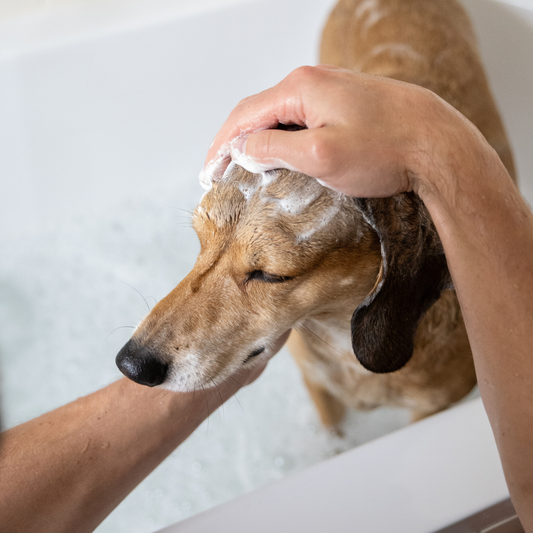
- Use a cup or a low-pressure attachment to pour water gently over their body, keeping spray noise to a minimum.
5. Use Gentle, Soothing Grooming Products
Harsh cleansers, strong artificial fragrances, and sulfates can sting sensitive eyes or irritate dry skin, turning a peaceful bath into a uncomfortable ordeal.
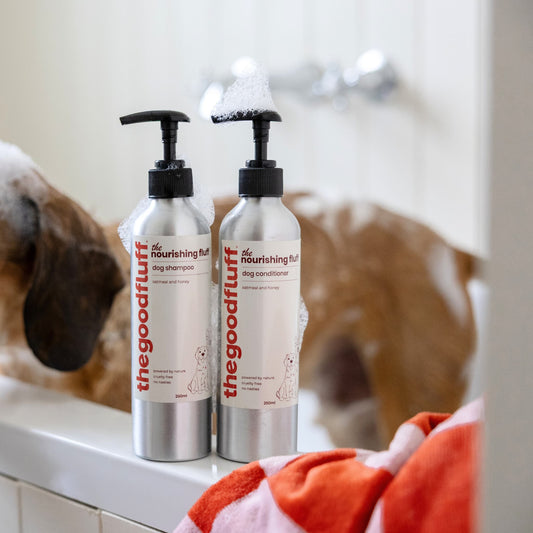
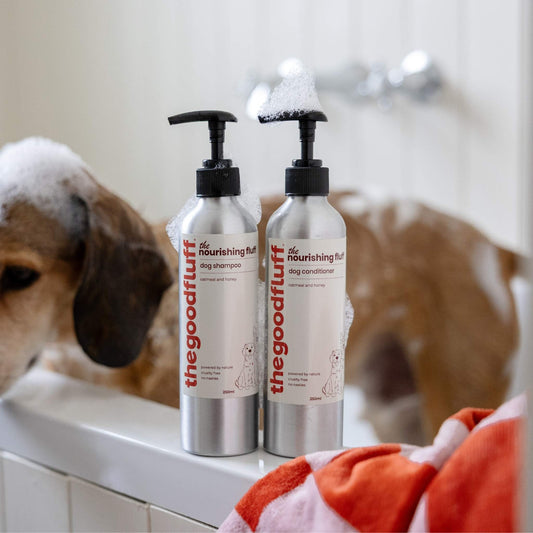
Using a gentle, natural formula helps keep their skin barrier protected during washes. If your pup is prone to scratching or post-bath irritation, choose a soothing formula like our Natural Oatmeal & Honey Dog Shampoo. Formulated with colloidal oatmeal, it calms redness and hydrates sensitive skin without stripping natural oils.
💡 Is your pup scratching after baths? Learn why in our article: Dog Itchy After a Bath? It Might Be Their Shampoo.
6. Keep Your Cool (Your Energy Matters)
Dogs are master observers of human body language and emotion. If you approach bath time feeling stressed, rushed, or anxious, your dog will pick up on those cues and assume there is something to fear. Speak in a calm, reassuring tone, move deliberately, and give plenty of verbal encouragement throughout the process.
7. End on a High Note
Always finish the session with something your dog loves, regardless of how the bath went. Offer a favourite treat, enjoy a game of tug, or wrap them in a warm towel for extra snuggles. Ending on a positive note leaves a lasting impression that makes the next session easier.
Consistency Builds Confidence
Desensitizing your dog to bath time won't happen overnight, but small, consistent steps pay off. By incorporating dry runs, soothing products, and positive reinforcement, you can turn bath time into a stress-free routine.
For more tips on caring for sensitive skin, check out our guide on The Power of Oatmeal in Dog Grooming or explore our Benefits of Aloe Vera in Dog Shampoo guide.