Grass Seed Season: How to Protect Your Dog's Paws (and Coat) This Summer
Quick answer: Grass seed season runs roughly from late spring through early autumn in the UK, peaking in July and August when seed heads dry out and become sharp enough to work their way into a dog's paws, ears and coat. The fix is simple but non-negotiable: check your dog over after every walk through long grass, comb through their fur, and deal with any seed you find straight away, before it has the chance to burrow in.
If you've got a dog who loves nothing more than bombing through a meadow or a patch of overgrown verge, you'll want to read this before your next walk.
What Is “Grass Seed Season” and Why Does It Sneak Up on Us?
Every summer, grass seed heads dry out, harden, and drop off the stem. Their shape is the whole problem: narrow, barbed, and pointed at one end, built by nature to travel one way only (forward!). Those seeds catch in fur and, once they're against skin, can start working their way in with every step, lick, or shake.
It's a genuinely common summer hazard for UK dog owners, and it catches people out every year mostly because it's so easy to miss. A seed lodged between the toes doesn't always look like much, sometimes it's barely visible until a dog starts limping, licking obsessively at one paw, or shaking their head.

Where Grass Seeds Actually Get In (and Why Some Spots Are Worse Than Others)
Grass seeds aren't fussy about where they land, but a few spots cause the most trouble:
• Between the toes and paw pads. This is the number one hotspot. The gaps between toes are warm, slightly damp, and easy for a seed to wedge into after a run through long grass.
• Ears. Floppy-eared breeds like cocker-spaniels in particular can pick up a seed at the entrance to the ear canal, where it's harder to spot and easily missed in a quick once-over.
• Eyes. Seeds can blow or brush into the corner of the eye, causing sudden squinting or watering.
• Coat and armpits. Anywhere fur is longer or thicker — under the legs, around the collar, along the belly is also a hot spot, especially for double-coated or longer-haired breeds.

Your Post-Walk Grass Seed Check, Step by Step
The single best habit you can build this time of year is a quick, unhurried once-over after every walk that involved long grass, meadows, or overgrown paths. It takes two or three minutes and it's the difference between catching a seed early and dealing with a much bigger problem later
1. Start with the paws. Sit your dog down and gently spread each paw, separating the fur between the toes. Run a finger along each pad and between each toe, feeling for anything hard, sharp, or bristly. If your dog has particularly hairy feet, a fine-toothed comb makes this much easier than fingers alone.
2. Check the ears. Lift each ear flap and look inside, particularly around the entrance to the canal. A dog who's suddenly shaking their head, tilting it to one side, or scratching at one ear after a walk is telling you something.
3. Look at the eyes. A watery eye, sudden squinting, or a lot of blinking on one side can mean a seed has caught the surface of the eye.
4. Comb through the coat. A slow brush through, especially around the legs, belly, and collar area, will catch anything that's clinging to fur but hasn't reached skin yet.
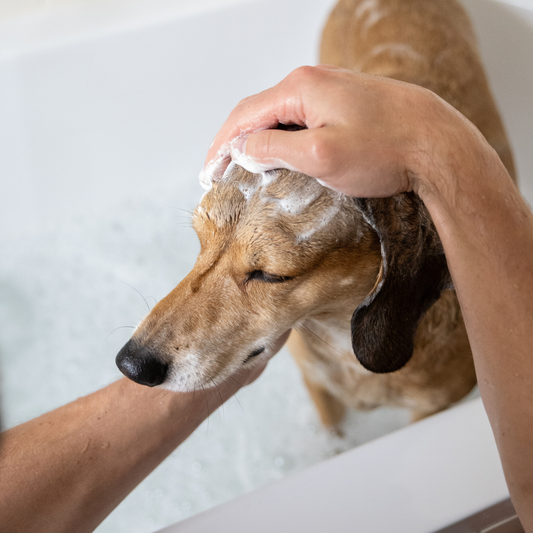
5. Give the coat a proper look and a wash if needed. After a really long or muddy walk, a gentle rinse or bath helps loosen anything still tangled in the fur before it has a chance to work its way further in. This is where a wash with a mild, non-stripping shampoo earns its keep, it clears the coat properly without leaving skin dry or tight, which matters if you're doing this more often during peak season.

If You Find a Seed: What to Do (and What Not to Do)
If a seed is sitting loose in the fur or resting on top of the skin, it's usually straightforward to lift out with clean fingers or tweezers, then check the spot afterwards to make sure nothing's left behind.
If a seed looks like it's already broken the skin, or you can see a small wound with no seed visible, don't go digging for it yourself. Grass seeds are barbed so they only travel in one direction, which means attempts to pull or squeeze one out can push it deeper or cause it to snap. This is a job for a vet, who has the right tools and, if needed, can sedate a dog to remove it safely and comfortably.
A limp that appears out of nowhere, a paw that's suddenly being licked non-stop, or a head tilt that doesn't resolve are all good reasons to get it looked at rather than wait and see.
Which Dogs Need Extra Vigilance?
Every dog that walks through grass is at some risk, but a few things raise the odds: longer or curlier coats that trap seeds more easily, floppy ears that hide what's happening at the entrance to the ear canal, and a general love of charging through long grass rather than sticking to the path.
Working breeds, spaniels, and anything with feathered legs or ears tend to need the most frequent checking through July and August.
Making It Part of the Routine, Not an Extra Chore
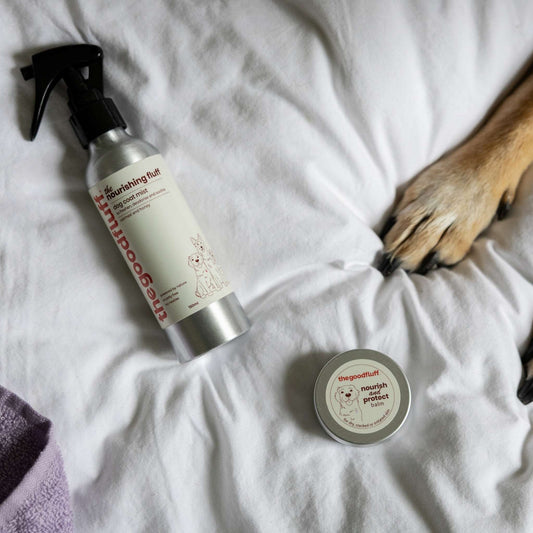
A lot of our Good Fluff customers find that a quick paw inspection fits naturally alongside a dab of our nourish and protect paw balm after a walk, it gives you a reason to actually handle each paw and look between the toes properly, rather than a fast glance from above.
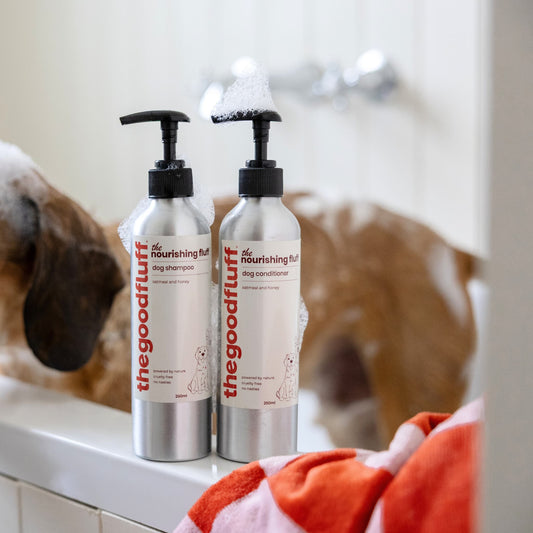
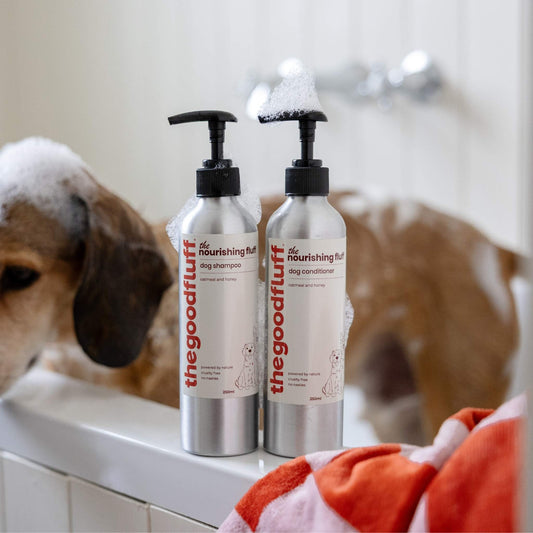
And if a walk's turned into a proper romp through a meadow, a wash with our oatmeal and prebiotic shampoo afterwards helps clear the coat gently without leaving skin feeling dry or stripped, which is especially handy if you're washing more often during peak season. Neither replaces a proper daily check, but they make the habit easier to keep up.

The Bottom Line
Grass seed season isn't something to panic about, but it is worth taking seriously from late spring right through to early autumn. A genuinely quick daily habit, paws, ears, eyes, coat, in that order, catches the vast majority of problems before they start. Build it into your after-walk routine now, so your dog is comfortable and used to the post walk checks!
Looking for gentle products to make your post-walk routine easier? Explore The Good Fluff's natural shampoo, conditioner, coat mist, and paw balm — made in the UK, with full ingredient transparency, for dogs (and paws) of every kind.