How to Reduce Dog Shedding Naturally (And When It’s Normal)
If you’re finding fur on the sofa, your clothes, and pretty much everywhere else, you’re not alone. Dog shedding is one of the most common concerns pet parents search for, especially during seasonal coat changes.
The good news? Shedding is completely normal for most dogs. The better news? There are gentle, natural ways to help manage excessive shedding and support a healthier coat, without harsh products or unrealistic promises.
Here’s what to know.
Is Dog Shedding Normal?
Yes, shedding is a natural part of a dog’s coat cycle.
Most dogs shed:
-
Seasonally, especially in spring and autumn
-
More heavily indoors, where artificial heating and lighting can disrupt natural coat cycles
- Differently by breed, coat type, and lifestyle
Shedding helps dogs remove old or damaged hair to make room for new growth. In many cases, it’s nothing to worry about.
However, excessive or sudden shedding can sometimes be a sign that something is out of balance.
Common Reasons Dogs Shed More Than Usual
While genetics play a role, increased shedding is often linked to everyday factors, especially skin and coat health.
- Dry or Irritated Skin: Cold weather, dry indoor heating, or frequent bathing can strip natural oils. When skin becomes dry, hair follicles weaken, leading to premature hair loss.
- Harsh Grooming Products: Some shampoos use strong detergents or artificial fragrances to create foam, but these can be drying and irritating, particularly for sensitive dogs.
- Over-Bathing: Bathing too frequently prevents the skin from maintaining its natural protective barrier.
- Inconsistent Brushing: Loose hair that isn’t removed regularly ends up on your furniture. Using the correct tool for your dog’s coat type such as a de-shedding tool for double coats or a slicker brush for curls is essential to reach the loose undercoat.
- Internal Nutrition: A lack of essential fatty acids can lead to a brittle coat. Ensuring your dog has access to plenty of fresh water and a diet rich in Omega-3s helps support hair strength from the inside out.
A Simple Routine to Help Manage Shedding
Consistency matters more than frequency. You don’t need a complicated routine to see results; you just need the right steps:
- Brush regularly: Use a tool suited for your dog's breed to lift away dead fur before it drops.
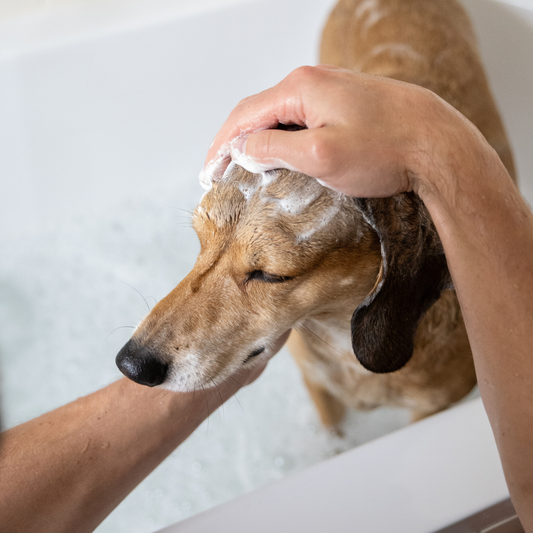
- Bathe with a gentle shampoo: Choose a formula that cleans without stripping their natural oils.
- Always follow with a conditioner: This rehydrates the skin and smooths the hair shaft to prevent the breakage that leads to "extra" shedding.
- Rinse thoroughly: Ensure no residue is left behind, as this can cause itchiness.
- Dry fully: Use a towel or a low-heat dryer, especially in colder months, to prevent moisture from sitting against the skin.
When Shedding Might Need a Closer Look
While most shedding is a normal part of life, it is worth consulting your vet if you notice:
- Sudden or extreme hair loss
- Bald patches or thinning spots
- Red, inflamed, or flaky skin
- Intense itching or constant licking
- An unusual or strong odour coming from the skin or coat
If shedding changes dramatically or is accompanied by these symptoms, it’s always best to get a professional check-up to rule out underlying issues.
Supporting a Healthy Coat, Naturally
Shedding is part of life with dogs, dog hair gets everywhere! But excessive shedding doesn’t have to be.
By focusing on gentle grooming, skin-friendly products, and a balanced routine, you can help support your dog’s coat health and keep shedding more manageable.
If dryness or sensitivity is contributing to excess shedding, choosing grooming products that are kind to skin and coat can make a meaningful difference over time.
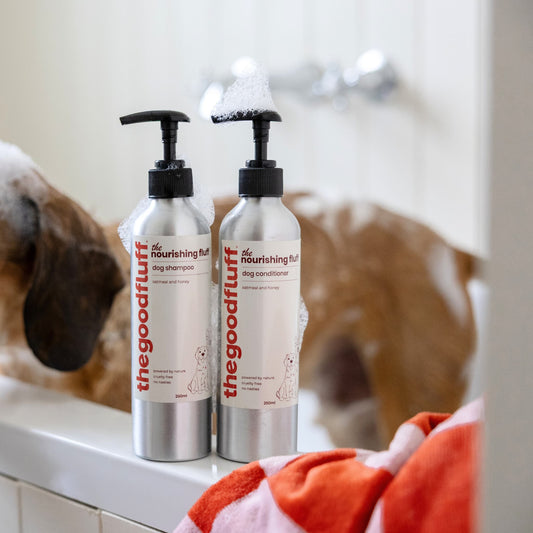
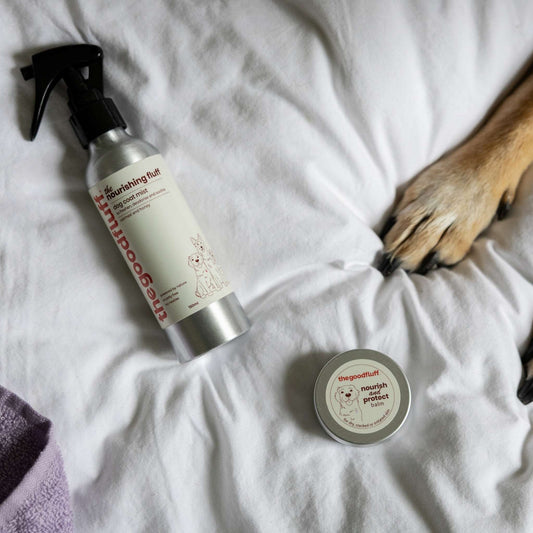
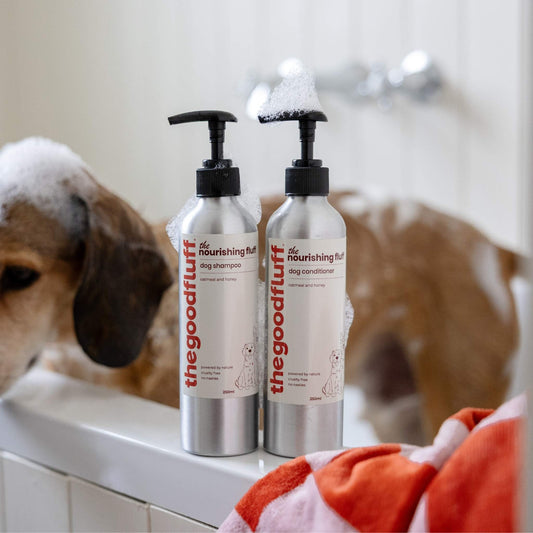
If you’re looking to support coat health through gentler grooming, our Nourishing Fluff Shampoo and Conditioner are formulated to cleanse and condition without stripping natural oils, making them a thoughtful choice for dogs prone to dryness or sensitivity.