Does Your Dog’s Breed Affect Their Skin? A Guide to Breed-Specific Grooming Care
Have you ever noticed that a Labrador’s coat can feel waxy, while a Poodle mix often feels dry and cotton-like? Or that some Frenchies seem to carry a permanent “musty” smell no matter how often they’re bathed?
This isn’t just a coincidence, it’s biology!
Different dog breeds have vastly different sebum (oil) levels, skin pH balances, and coat structures. This means their grooming needs aren’t one-size-fits-all. What works for a Golden Retriever might actually cause a flare-up for a Staffy.
Understanding your dog’s breed-specific skin tendencies is the first step to a happier, itch-free pup. Here is how to tailor your routine for the most common coat types
1. The "Wrinkle" Breeds: Bulldogs, Frenchies & Pugs
Common Challenges: These breeds are prone to Skin Fold Dermatitis. Their adorable wrinkles trap moisture, warmth, and food debris, creating a dark, damp environment where bacteria and yeast thrive. This is often the source of that "corn crisp" smell.
A Gentler Routine:
- Skip the Over-Bathing: Too much water can get trapped in the folds. Focus on targeted daily maintenance instead.
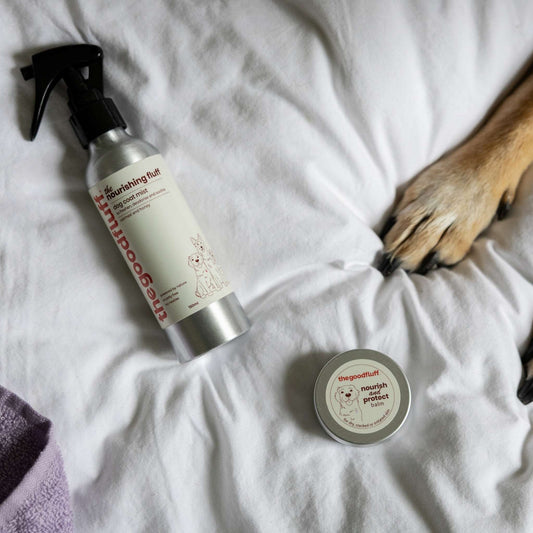
- "Clean & Protect": Gently clean the skin folds with a soft cloth to remove debris. Once dry, apply a Natural Skin & Paw Balm to create a breathable, water-resistant barrier. This prevents moisture build-up and keeps the skin calm.
2. The Poodles & "Doodle" Mixes
Common Challenge: These breeds have "low-shedding" coats. Because the hair doesn't fall out, it traps dirt, dander, and allergens close to the skin. Additionally, the curly texture prevents natural skin oils from traveling down the hair shaft, leading to matting and flaky patches.
A Gentler Routine:
- Hydration is Key: Doodles need moisture more than any other coat type.
- The Daily Spritz: Use a lightweight Dog Coat Mist before brushing. This adds essential hydration to the skin, reduces static, and helps the brush glide through tangles without breaking the hair. Think of it as a "leave-in conditioner" for your dog.
3. The "Water Dogs": Labradors, Goldens & Spaniels
Common Challenge: Breeds bred for swimming naturally produce high levels of sebum (oil) to waterproof their coats. When this oil mixes with water and sits on the skin, it oxidizes, creating that familiar "wet dog" smell.
A Gentler Routine:
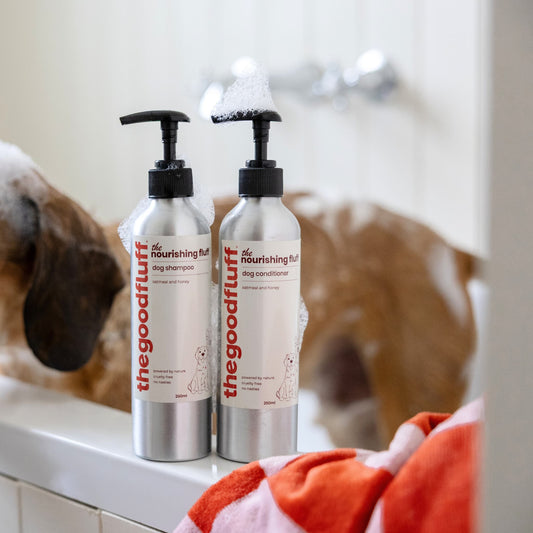
- Balance, Don't Strip: Avoid harsh detergents that strip oil (which only signals the skin to produce more oil). Use a pH-balanced, natural shampoo.
- The Post-Walk Refresh: You don't need a full bath every time they swim. A thorough rinse followed by a Natural Deodorising Mist can neutralise odours by breaking down the bacteria causing them, rather than just masking the scent.
4. The Short & Sensitive Coats: Staffies, Boxers & Vizslas
Common Challenge: Don't let the tough exterior fool you, these breeds often have the most sensitive skin. With short fur offering little protection, their skin is directly exposed to environmental allergens like pollen, grass seeds, and dust mites.
A Gentler Routine:
- The "Post-Walk Reset": If your dog is itchy after a walk, it might be pollen on their skin.
- Wipe Down: Use a damp cloth or a Grooming Spray on a towel to wipe down their belly and paws after outdoor adventures. This physically removes the allergens before they can penetrate the skin barrier and cause a reaction.
The Verdict
No matter the breed, grooming shouldn't be about fixing problems, it should be about preventing them. By tailoring your routine to your dog’s specific biology, you can support their skin barrier and stop the itch before it starts.